Audience of One
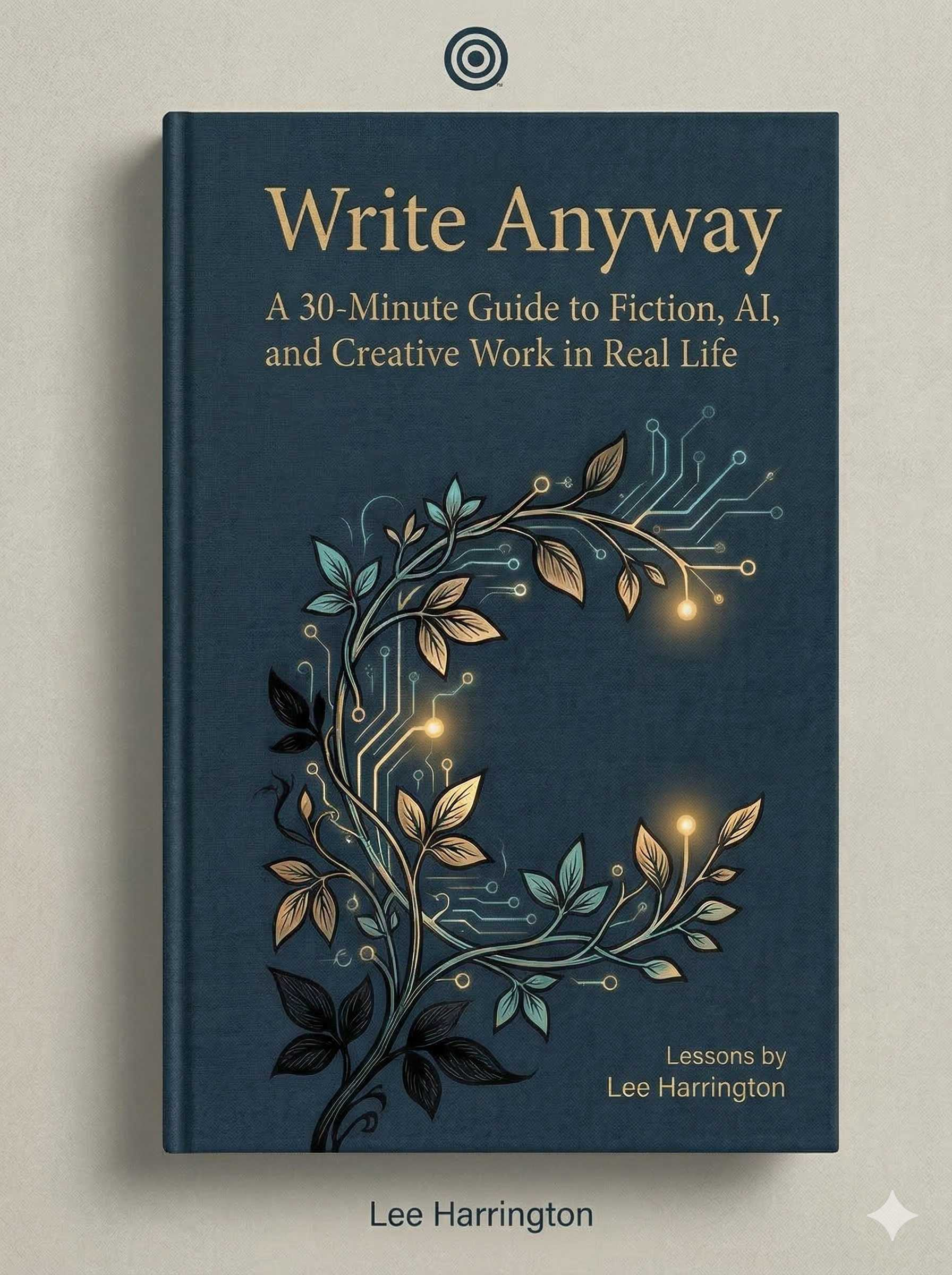
I just wrote a book for an audience of one: my daughter.
I took the agent/skills system I’ve been developing and applied it to create a bespoke book just for her. This is what I mean when I say AI unleashes creativity.
My daughter recently moved back home with my two grandchildren, both under three. Life didn’t work out the way she hoped. I want to help her rebuild and relaunch into the job market in a few years—with skills that put her far beyond minimum wage. As you can guess, I believe AI will be one of those skills.
She wants to write a fiction book. So we combined the two goals.
Not using AI to write the book—the writing is hers. Using AI for everything around the writing. Yes, I understand the irony. I used AI to write a book about how to use AI… without using AI to do the actual writing. Inception anyone?
The book is designed for real life. Thirty minutes or less at a time—nap time, early morning, whatever she can manage. She can move forward at her pace.
It starts with the fundamentals:
- how a book is structured
- how to think about storytelling
- how to use AI effectively
Then 24 short lessons. Each one includes something to write and a way to use AI to support that work.
My kids hate my AI-generated music. They don’t like the concept, so they won’t give it a fair shot. But my daughter read the introduction to this—and she was hooked. Engaged. Excited to keep going. That’s all the validation I need.
If this approach feels familiar, it should. It’s the same system I use in software engineering—just applied to writing instead of building apps. I define the vision, purpose, style, and meaning up front.
Then I use agents (roles) and skills (instructions) working as a team to produce the draft.
A completely separate set of agents reviews it. Reviewers don’t rewrite—they critique. They identify what needs improvement.
Several rounds of that.
Then I step in again. I read it. I refine direction. I deepen the teaching.
More rounds.
The result is a book I’m genuinely proud of.
My role wasn’t “writer.” It was closer to a film director or music producer. AI formed the staff. I shaped the outcome.
I used to think I’d never let AI write for me. I’d write, and AI would assist. Then I built a system to write a book about using AI in software engineering. Why not? The book is about using AI. The method is the message.
Then someone asked a question, and I thought, “A lot of people probably wonder this.”
So I wrote another book.
I’m not trying to be Stephen King. That’s not the only measure of success.
Can I help people? Can I create things that help even more people?
Yes.
Human—enhanced by AI. The future looks bright to me.