Lunduke
News • Science & Tech
Microsoft's "Revenue Bomb" of the early 1980s
The plan: Develop the same software for every computer platform they could find (including C64, Apple II, and UNIX).
August 25, 2023
post photo preview

It is fascinating to look back at the way Microsoft’s approach to the software industry has changed over the years.

Case in point: In the early 1980s, Microsoft was attempting to make software for every microcomputer they could find. This was an effort they called “The Revenue Bomb”.

Multiplan: The first “Revenue Bomb” software

In 1982, Microsoft released a new spreadsheet program which was envisioned as a direct competitor to VisiCalc (the first commercially successful spreadsheet software).
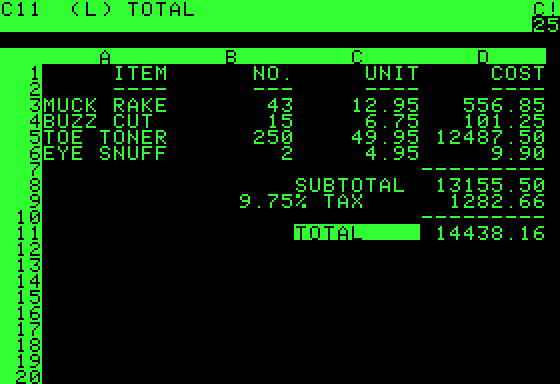
This is what VisiCalc looked like on an Apple II

Initially, that new Microsoft Software was called “Electronic Paper” (aka “EP”). The idea was to unseat VisiCalc by doing something truly impressive: Releasing Electronic Paper for as many computer platforms as humanly possible.

Microsoft was — at least in the early days — a very “multi-platform” computer company. Developing core operating systems and BASIC implementations for a wide variety of platforms (including Commodore 64, Apple II, Tandy, and so many others). Heck, they even made hardware for the Apple II.

In order to accomplish this task -- of releasing for such a huge number of platforms -- Microsoft developed a P-Code C compiler which they could then, in turn, port to a number of existing 8-bit platforms… all without needing to make any (substantial) changes to the core code of Electronic Paper itself.

P-Code (or Portable Code) is a type of machine code that was intended to run within a virtual machine (to one degree or another). If you could port the underlying virtual machine to a new platform, the P-Code compiled software could (in theory) simply work “out of the box”.

By the time the first version of Electronic Paper was ready to ship — initially for the CP/M operating system (from Gary Kildall’s Digital Research) — the name was changed to “Microsoft Multiplan” (or “MP”)… and Microsoft was off to the races.
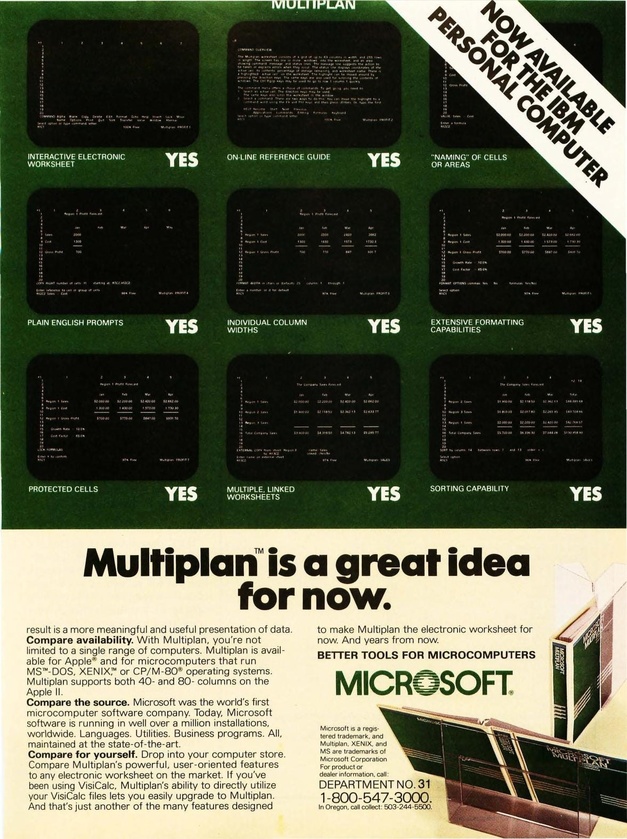
Advertisement from the August, 1983 issue of BYTE magazine

Over the years that followed, Microsoft ported Multiplan to as many platforms and operating systems as they possibly could… thanks, in very large part, to their “P-Code written in C” approach.
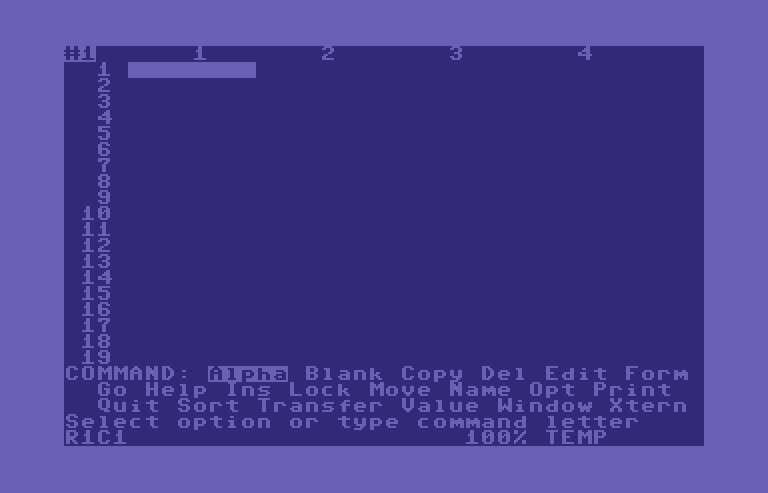
Microsoft Multiplan for Commodore 64

Multiplan was everywhere in the 1980s.

CP/M, Apple II, the Macintosh, Commodore 64, DOS, Xenix / UNIX, MSX, the TI-99/4a, the TRS-80 (various models), and even the Thomson TO9+.

Microsoft Multiplan for the Macintosh

Yeah. When I say Multiplan was everywhere… I mean it. It was almost hard to find a computer platform that did not have a version of Microsoft Multiplan available.

The man behind “The Revenue Bomb”

This strategy of releasing Multiplan for so many platforms was not accidental. It was a plan laid out by Charles Simonyi, the head of Microsoft’s application software group.

The developer of the P-Code compiler, Richard Brodie (who would go on to develop the first version of Microsoft Word), described it this way:

“Here's how the Revenue Bomb worked. You would list all the different business products that Microsoft would develop on the horizontal axis. On the vertical axis, you would list all the different personal computers that were coming out from the dozens of hardware manufacturers. The p-code C compiler, which I named "CS" and which was used for more than ten years to develop Microsoft application software, would allow us to create separate versions of each product very easily for each of the different machines.


What we didn't realize -- nor did most people in those days -- was that there wouldn't be dozens of different PC architectures competing for the market. There would soon be only two: IBM's and Apple's Macintosh. But CS gave Microsoft the upper hand for many years in developing Mac and IBM applications hand-in-hand.”

Charles Simonyi & Richard Brodie (courtesy Richard Brodie)

Using Brodie’s P-Code C compiler, the task to develop Multiplan fell to a programmer, recruited from MIT, named Doug Klunder. As Brodie describes it:

“But Charles's mission was to compete against the surprisingly successful VisiCalc, the first spreadsheet program. He was to develop Microsoft's spreadsheet, a project code-named "EP" (for "Electronic Paper") and later marketed as Microsoft Multiplan. That task he entrusted to Doug Klunder, programmer extraordinaire, who would go on to lead the development of the unmatched Excel after Multiplan's lukewarm market reception in the face of Lotus 1-2-3.”

Ultimately, Multiplan ended up being only mildly successful — while it sold well, it was dominated in the market by Lotus 1-2-3. Microsoft shifted efforts and focused on developing the new “Excel” software only for Windows and Macintosh.

By the end of the 1980’s, Microsoft scrapped the “Revenue Bomb” strategy entirely… opting to focus the bulk of their office software efforts on the IBM PC Compatible market (primarily MS-DOS and Windows) and the Macintosh market.

Still...

It is amazing to look back at Microsoft’s approach in the early 1980s: of bringing software to as many platforms as they could possibly muster.

There’s something awesome about that.

What would the modern computer industry look like had “The Revenue Bomb” approach been more successful? Would there be more viable computing platforms?

Hard to say. But, it sure is fun to dream about…

 
community logo
Join the Lunduke Community
To read more articles like this, sign up and join my community today
2
What else you may like…
Videos
Podcasts
Posts
Articles
Meet "Kit", Firefox's New Non-Binary Mascot

Non-binary. With "They/Them" pronouns. For a Web Browser.

More from The Lunduke Journal:
https://lunduke.com/

00:09:16
IBM Fined $17 Million by DOJ for Discriminatory DEI Policies

No word yet on how this settlement might impact the multiple pending lawsuits against IBM (and subsidiary Red Hat) related to DEl policies.

More from The Lunduke Journal:
https://lunduke.com/

00:11:26
Michigan Lawmakers Withdraw Age Verification Bill

Michigan House Bill 4429 and Senate Bill 284, which would have required Age Verification in all Operating Systems (including Linux & Windows), has officially been pulled after public backlash.

More from The Lunduke Journal:
https://lunduke.com/

00:13:45
November 22, 2023
The futility of Ad-Blockers

Ads are filling the entirety of the Web -- websites, podcasts, YouTube videos, etc. -- at an increasing rate. Prices for those ad placements are plummeting. Consumers are desperate to use ad-blockers to make the web palatable. Google (and others) are desperate to break and block ad-blockers. All of which results in... more ads and lower pay for creators.

It's a fascinatingly annoying cycle. And there's only one viable way out of it.

Looking for the Podcast RSS feed or other links? Check here:
https://lunduke.locals.com/post/4619051/lunduke-journal-link-central-tm

Give the gift of The Lunduke Journal:
https://lunduke.locals.com/post/4898317/give-the-gift-of-the-lunduke-journal

The futility of Ad-Blockers
November 21, 2023
openSUSE says "No Lunduke allowed!"

Those in power with openSUSE make it clear they will not allow me anywhere near anything related to the openSUSE project. Ever. For any reason.

Well, that settles that, then! Guess I won't be contributing to openSUSE! 🤣

Looking for the Podcast RSS feed or other links?
https://lunduke.locals.com/post/4619051/lunduke-journal-link-central-tm

Give the gift of The Lunduke Journal:
https://lunduke.locals.com/post/4898317/give-the-gift-of-the-lunduke-journal

openSUSE says "No Lunduke allowed!"
September 13, 2023
"Andreas Kling creator of Serenity OS & Ladybird Web Browser" - Lunduke’s Big Tech Show - September 13th, 2023 - Ep 044

This episode is free for all to enjoy and share.

Be sure to subscribe here at Lunduke.Locals.com to get all shows & articles (including interviews with other amazing nerds).

"Andreas Kling creator of Serenity OS & Ladybird Web Browser" - Lunduke’s Big Tech Show - September 13th, 2023 - Ep 044

DHH +Omarchy means a very vocal Linux distro that pushes back against the insanity that has invested the open source world.

Omarchy IS a distro. They have their own repo mirrors (2 of them, in fact), an ISO, etc. Did you know that Ubuntu and Fedora both started out as after install scripts, similar to how Omarchy did on Arch?

Omarchy's repos are protected by cloudflare, and not in some universities server closet.

On top of this, if things break on it, there is a team of impassioned people and I include myself, that want to fix it, and stop the good enough excuse that Linux has from continuing. Hopefully one day there will be an option to use Xlibre with a X based tiling manager that is as flexible as Hyprland is, but I honestly have not been so happy on my computer with an OS for a long time.

Omarchy is digital sovereignty. It is your system, to be celebrated and championed. The way computers should be. Here is the full video from Omacon. DHH's opening comments are awesome. All ...

Hey good people. I'm currently a lifetime subscribers but it seems I need a referral link to join the forum.lunduke.com . I wanted to see if I could get one plzz. Lunduke himself can verify me if needed. Thx!

Lunduke spotted in Hampton Law video at 4:15 😁

Last call for the "Amiga" Lifetime Subscriber Wall. It's almost full!

Holy smokes, that was fast.

The 6th Lunduke Journal Lifetime Subscriber Wall (aka the “Amiga OS 3.1” Wall) was introduced… what… a week ago?

I kid you not, the darn thing is already almost full! I was wildly unprepared for how popular this would be!

There’s enough space left for maybe 5 or 6 more names. Tops. Then I’ve gotta declare “Wall 6 (Amiga) is Full” and start Wall Number 7!

Here’s what all of the Lifetime Subscriber Walls look like (each shown at the end of every Lunduke Journal video):


If you want to get onto the Lifetime Subscriber Wall (and have any chance of making it onto the Amiga Wall before it’s full) here’s what you need to do (and do it quickly):

  1. Grab a Lifetime Subscription to The Lunduke Journal (if you don’t already have one).

    1. A Lifetime Sub includes all the standard perks (plus a few) and can be picked up via Locals, Substack, or Bitcoin (whichever you prefer).

  2. Email “bryan at lunduke.com” and let me know how you would like your name displayed (“Joe A.”, “Joseph Arnold”, “JoeyPants”, “SirJJMcManly”, etc.)

It’s first come, first served.

If you’ve already emailed me about being added to the wall, your spot is secured.

For the rest of you: Chop chop. At the current rate, I would be very surprised if the “Amiga Wall” wasn’t full by some time this weekend.

“Lifetime Wall 7” will be unveiled after the final name is added to the Amiga Wall. And, yes, it will be a different (awesome) retro computing platform.

As always, a huge thank you to every subscriber to The Lunduke Journal. Absolutely none of this would be possible without your support.

-Lunduke

Read full Article
post photo preview
Amiga Lifetime Wall & March Lunduke Journal Stats!

Hello all of you amazing Lunduke Journal subscribers!

With March now behind us, I wanted to give you crazy kids a quick “behind the scenes” look at the stats for The Lunduke Journal. Because Inside Baseball stuff is fun.

The Amiga Wall!

But before we dive into charts and numbers… behold! The brand new 6th Lifetime Subscriber Wall of Shame Awesomeness! The AmigaOS 3.1 Wall!


Every Lifetime Subscriber Wall (which I show at the end of each video) is a real screenshot from a different computing platform. Mostly retro. All awesome.


If you’d like to see your name listed on the new AmigaOS 3.1 wall, grab a Lifetime Subscription (if you don’t already have one) and toss me an email. I update the walls about once each week with new names.

The last few Lifetime Walls filled up incredibly quickly. So if the Amiga Wall interests you, I wouldn’t wait too long. Hint, hint.

March 2026 Stats

The big news: Total “views” were way, way up in March.

A fair bit beyond what was anticipated. A hair over 19 million during the month.


That’s in total, across all platforms. As usual, the audio podcast and X lead the way in terms of total views/listens for shows (by quite a lot).

Interestingly, we saw significant “views” growth on even the smallest platforms in March (Facebook and TikTok).

Free subscribers also took a major jump in March, with the largest one month gains ever (I’m pretty sure, certainly the largest this year or last). Up 7,623 over the month before.


Again, new subscribers grew across the board. The biggest gains were seen on X, but all platforms saw a significant bump.

Hard to complain about that!

The top 3 shows for March were all focused on the Age Verification laws:

While those were the top 3… it’s worth noting that the top 10 (and, really, the top 15 or so) shows for the month were all incredibly close in terms of viewership numbers.

As always, a huge thank you to all of The Lunduke Journal subscribers. You make all of this possible.

-Lunduke

Read full Article
Lifetime Wall Number 6, Plus How to Access MP4s & Forum

A few quick reminders for all of you amazing Lunduke Journal subscribers:

First: If you have any kind of payed subscription (Monthly, Yearly, or Lifetime) there are a bunch of cool perks available to you. MP4 Downloads, PDF eBooks, and access to the Lunduke Journal Forum. All the details on how to gain access to everything is right here.

Enjoy.

Second: At the end of this next week I’ll be unveiling “Lifetime Subscriber Wall of Shame” number Six at the end of all new Lunduke Journal videos.


At that same time I will be updating and permanently locking down Walls 1 through 5.

If you are already a Lifetime Subscriber, and would like to be added to the new Wall number 6 (or to one of the couple remaining spots on Walls 4 and 5), email me (bryan at lunduke.com) with how you would like your name to be displayed (full name, first name only, nick name… any way you like).

  1. CRT Linux Pico Wall: Full

  2. DOS Word Wall: Full

  3. Win 3.11 Notepad Wall: Full

  4. MacOS 9 Wall: 2 Spots Left

  5. PalmOS Wall: 1 Spot Left

  6. Mystery Wall: Open

Those final spots on the MacOS and PalmOS Walls are first come first served. The first people to request those spots get them.

Everyone else will roll over into Wall 6. Which is a secret, retro computer platform. You’ll dig it.

If you have already contacted me regarding being added to one of these walls (or changing the way your name is displayed), I’ve already got you on the list for the changes later this next week.

If you don’t already have a Lifetime Subscription, grab one and get yourself on the wall.

It’s pretty sweet.

-Lunduke

Read full Article
See More
Available on mobile and TV devices
google store google store app store app store
google store google store app tv store app tv store amazon store amazon store roku store roku store
Powered by Locals